Delving into the realm of AI and machine learning jobs for beginners sets the stage for an exciting journey filled with learning and growth. As we navigate through this landscape, intriguing insights and opportunities await, beckoning readers to embark on a path of discovery.
As we unravel the nuances of AI and machine learning in the context of job opportunities, a deeper understanding emerges, paving the way for a promising future in this dynamic field.
Understanding AI and Machine Learning Jobs for Beginners
Artificial Intelligence (AI) and Machine Learning are two rapidly growing fields that offer numerous job opportunities for beginners. AI refers to the simulation of human intelligence processes by machines, while Machine Learning is a subset of AI that involves the development of algorithms and statistical models that allow machines to improve their performance on a task without being explicitly programmed.
Difference between AI and Machine Learning
AI encompasses a broader scope of enabling machines to carry out tasks that typically require human intelligence, such as speech recognition, decision-making, and visual perception. On the other hand, Machine Learning focuses on developing algorithms that can learn from and make predictions or decisions based on data.
Increasing Demand for AI and Machine Learning Skills
With the rapid advancements in technology, there is a growing demand for professionals with AI and Machine Learning skills across various industries. Companies are leveraging these technologies to enhance productivity, make data-driven decisions, and improve customer experiences. As a result, individuals with expertise in AI and Machine Learning are highly sought after in fields like healthcare, finance, marketing, and more.
Essential Skills and Knowledge for AI and Machine Learning Beginners
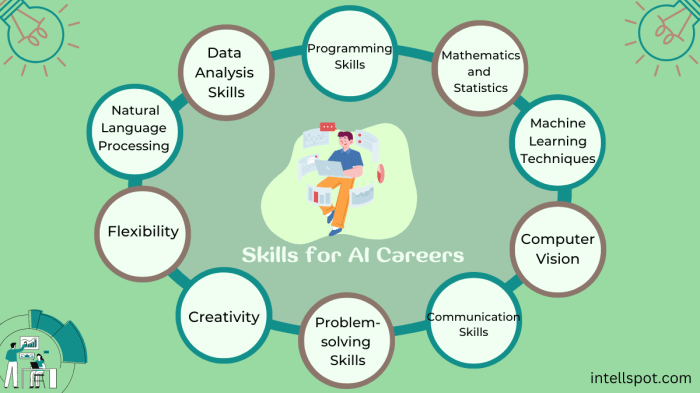
To excel in AI and machine learning jobs, beginners must acquire a set of essential skills and knowledge that form the foundation of these fields.Programming Languages:
Fundamental Programming Languages
Programming languages play a crucial role in AI and machine learning development. Beginners should focus on mastering the following fundamental languages:
- Python: Known for its simplicity and versatility, Python is widely used in AI and machine learning projects due to its extensive libraries like TensorFlow and Scikit-learn.
- R: Specifically designed for statistical computing and graphics, R is popular among data scientists and analysts working on machine learning algorithms.
- Java: Java is essential for building robust applications and integrating machine learning models into larger software systems.
Statistics and Mathematics:
Importance of Statistics and Mathematics
Statistics and mathematics form the backbone of AI and machine learning. Understanding concepts like probability, linear algebra, and calculus is crucial for:
"Building and evaluating machine learning models, interpreting results, and making data-driven decisions."
Data Preprocessing:
Significance of Data Preprocessing
Data preprocessing involves cleaning, transforming, and organizing raw data before feeding it into machine learning algorithms. It is essential for:
- Ensuring data quality and consistency.
- Removing noise and irrelevant information.
- Handling missing values and outliers.
- Scaling and normalizing features for better model performance.
Entry-Level Job Roles in AI and Machine Learning
When starting a career in AI and machine learning, there are several entry-level job roles that individuals can pursue. These roles provide a foundation for understanding the field and gaining practical experience.
Examples of Entry-Level Job Titles
- Data Analyst
- Machine Learning Engineer
- AI Specialist
Responsibilities of Different Roles
While data analysts, machine learning engineers, and AI specialists all work within the realm of AI and machine learning, their responsibilities vary:
- Data Analyst:Focuses on interpreting data, analyzing trends, and generating insights to support decision-making processes.
- Machine Learning Engineer:Designs and develops machine learning models, algorithms, and systems to solve specific problems or tasks.
- AI Specialist:Specializes in creating and implementing artificial intelligence solutions, including natural language processing, computer vision, and robotics.
Skills Required for Entry-Level Positions
Depending on the specific role, entry-level positions in AI and machine learning require a combination of technical and soft skills:
| Data Analyst | Machine Learning Engineer | AI Specialist |
|---|---|---|
| Statistical analysis | Programming languages (Python, R) | Deep learning frameworks (TensorFlow, PyTorch) |
| Data visualization | Machine learning algorithms | Natural language processing |
| Database management | Big data technologies | Computer vision |
Steps to Prepare for AI and Machine Learning Jobs
Aspiring to start a career in AI and machine learning requires proper preparation to stand out in this competitive field. Here are some essential steps to help you get started:
Educational Paths for Beginners
Embarking on the journey towards AI and machine learning jobs often begins with acquiring the right education and skills. Consider the following educational paths suitable for beginners:
- Complete online courses or certifications in AI and machine learning from reputable platforms like Coursera, Udemy, or edX.
- Pursue a degree in computer science, data science, mathematics, or a related field to gain in-depth knowledge and understanding of the fundamentals.
- Participate in bootcamps or workshops that focus on practical applications of AI and machine learning concepts.
Building a Strong Portfolio or Projects
One of the most effective ways to showcase your skills and expertise in AI and machine learning is by building a strong portfolio or working on projects. Employers often look for practical experience, so consider the following tips:
- Work on real-world projects that demonstrate your problem-solving abilities and understanding of AI algorithms.
- Showcase your projects on platforms like GitHub or Kaggle to make them accessible to potential employers and collaborators.
- Continuously update and improve your portfolio to reflect your evolving skills and knowledge in the field.
Networking and Connecting with Professionals
Networking plays a crucial role in advancing your career in AI and machine learning. Here are some tips on how to connect with professionals in the field:
- Attend industry conferences, seminars, and meetups to meet like-minded individuals and experts in AI and machine learning.
- Join online forums, communities, and social media groups dedicated to AI and machine learning to engage with professionals and seek advice.
- Reach out to mentors or professionals in the field for guidance, feedback, and potential career opportunities.
Conclusive Thoughts
In conclusion, the world of AI and machine learning jobs for beginners is brimming with potential and possibilities. By equipping oneself with the right skills and knowledge, aspiring professionals can carve out a rewarding career path in this ever-evolving industry.
FAQ Summary
What are some common entry-level job titles in AI and machine learning?
Some common entry-level job titles include data analyst, machine learning engineer, and AI specialist.
Why is data preprocessing important in AI and machine learning?
Data preprocessing is crucial as it involves cleaning and transforming raw data to make it suitable for analysis, ensuring accurate results in AI and machine learning models.
How can beginners in AI and machine learning build a strong portfolio?
Beginners can build a strong portfolio by working on projects, participating in hackathons, and showcasing their skills through platforms like GitHub.